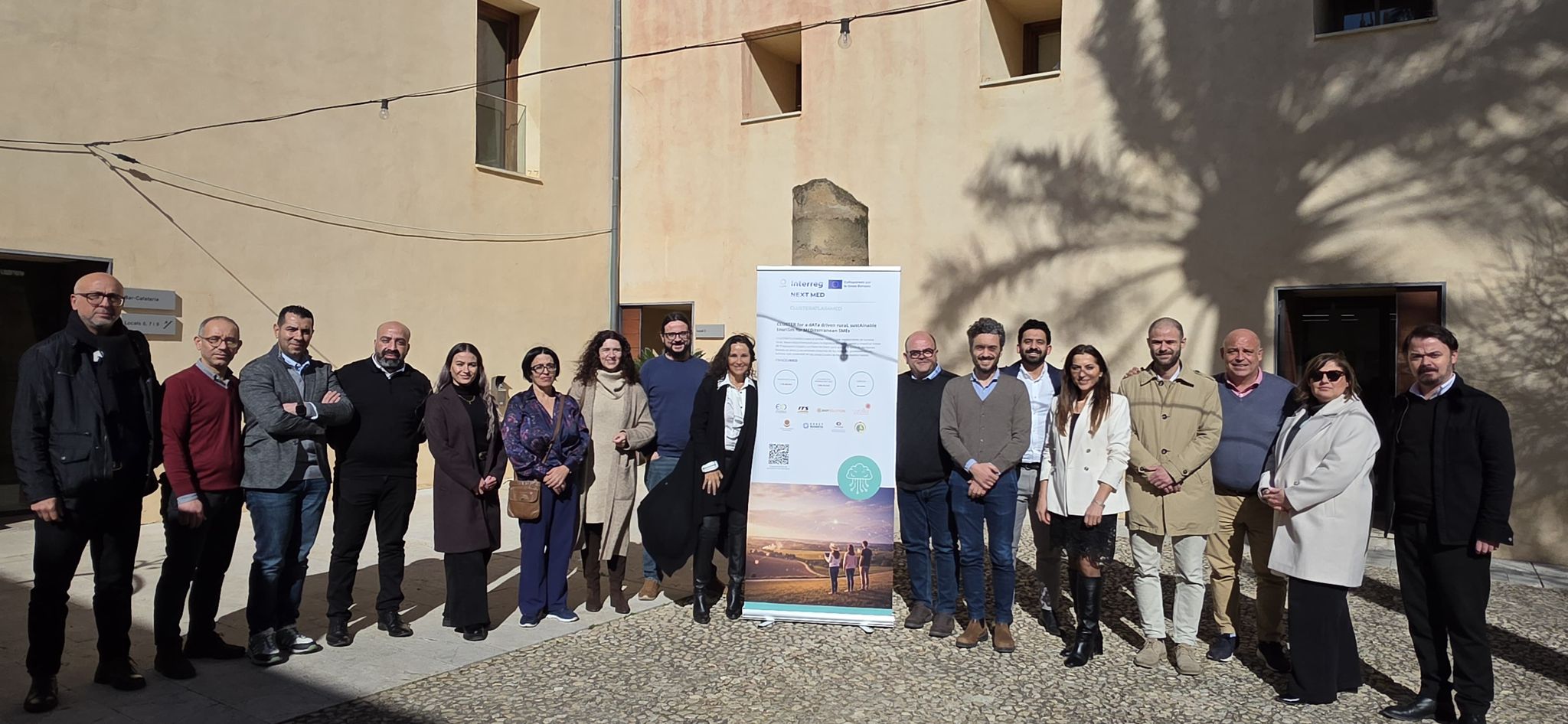
On February 3–4, the CLUSTERATLAS4MED consortium gathered to discuss the results achieved so far and to coordinate the next operational phases, with particular attention given to the outcomes of the survey and comparative analysis conducted during the project’s initial months.
This work highlights a significant finding: the digital transformation of rural tourism is no longer a future prospect, but a process already underway.
Preliminary results collected across more than 30 countries in the European Union and the Mediterranean Partner Countries (MPC) outline a clear picture: digitalisation is a shared strategic priority, yet structural gaps persist, requiring stronger coordination, enhanced skills, and targeted tools to support local stakeholders.
The survey shows that in both EU countries and MPCs, rural tourism digitalisation is primarily driven by public authorities and Destination Management Organisations (DMOs).
The cluster approach, like the one pursued by CLUSTERATLAS4MED, proves to be the most effective model, as clusters play a key intermediary role in facilitating SMEs’ access to training, digital tools, and innovation services.
While challenges such as digital skills gaps, limited access to finance, and weak coordination among stakeholders remain, insights from ongoing qualitative interviews continue to validate and refine the effectiveness of this approach.
The comparative analysis spans over 30 countries and feeds into a Benchmark Matrix comprising more than 100 measures, programmes, and initiatives. These are assessed in terms of governance, budgets, uptake levels, digital focus, and evidence of impact, providing a robust and comparable analytical foundation.
Across countries, several clear patterns emerge:
- Digitalisation is a shared priority, with growing adoption of AI assistants, AR/VR for storytelling, and data analytics tools;
- Sustainability is increasingly integrated through digital certification and monitoring systems;
- Centralised digital platforms reduce fragmentation, enhance SME visibility, and support integrated destination management;
- Clusters are broadening their scope to include agrifood, handicrafts, and cultural heritage;
- Skills gaps remain widespread across all countries;
- Funding environments differ: more structured schemes are found in EU countries, while many MPCs rely more heavily on donor-funded programmes.
Transferable practices identified include national tourism data platforms, digital sustainability pathways, certification systems, digital marketplaces for rural artisans, community-based tourism models, and immersive cross-border cultural routes.
In the case of Malta, despite strong national digital and tourism strategies, rural tourism is not yet formally structured: there is no dedicated entity and no licensed rural tourism SMEs. Development remains fragmented and community-led, with promising initiatives such as the Merill Rural Network, which brings together around 30 SMEs and collaborates on the development of a National Guide for Rural Tourism.
The evidence gathered reinforces, for ATLAS4MED, the need to develop a Meta-Cluster model, a shared Digital Atlas, targeted training and mentoring for SMEs, accessible digital tools, and common standards and dashboards to support the Rural Living Labs.
 Next Med