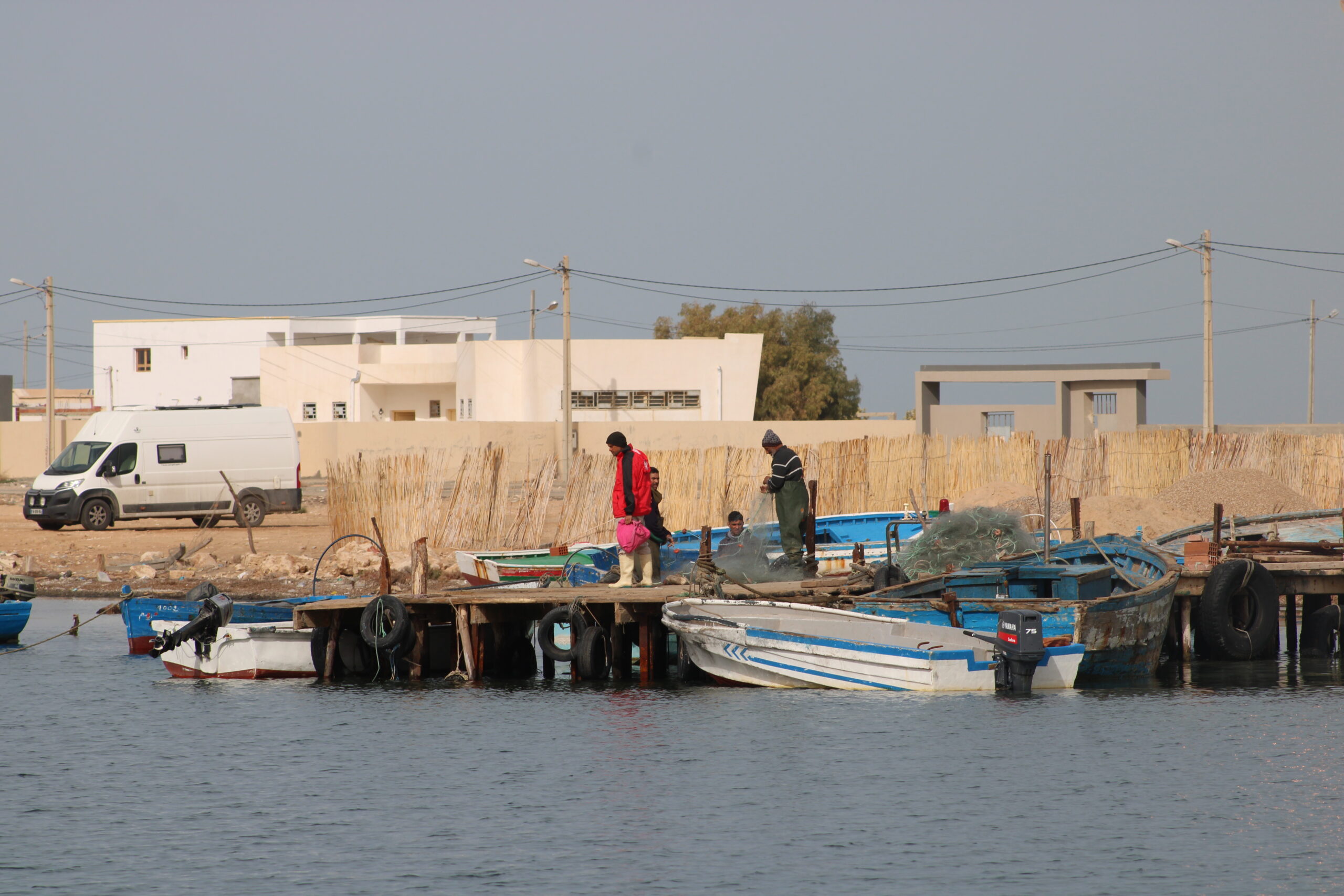
Project MedPROACT is implementing pilot actions and fieldwork in ten different pilot areas spread across the Mediterranean, from Italian to Tunisian shores, from southern Türkiye to the Jordan Read Sea.
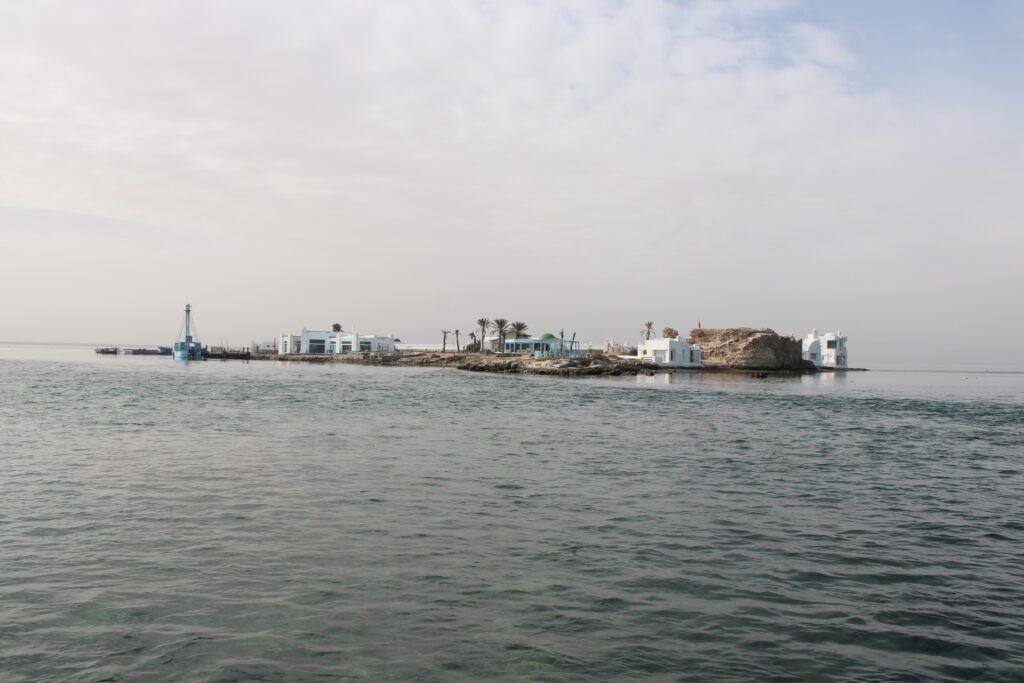
One of these areas is the El Bibane Lagoon, located near Zarzis in southern Tunisia – the country’s largest coastal lagoon, an unvaluable coastal wetland ecologically unique and home to a diverse array of commercially valuable fish and shrimp.
This year’s World Wetlands’ Day focuses on the main role wetlands play in cultural heritage, and El Bibane Lagoon represents how human intelligence coming from way back in the past can merge with environmental knowledge and sustainable pratices.
El Bibane is a designated RAMSAR site of international importance and its ecological uniqueness comes from the rare coralline algal ridges along its Eastern shore, a phenomenon uncommon in such sheltered lagoonal environments. This lagoon hosts valuable species such as the European seabass (Dicentrarchus labrax) and the gilthead seabream (Sparus aurata), trapped inside, just like the commerciable fish and shrimp, by a permanent, fixed barrier over 3.6 kilometers long that spans to the main sea channel, the ancient “charfia” system.
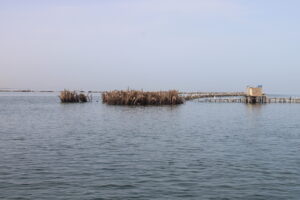
The charfia was a complex, fixed fish weir made of palm fronds and branches, designed to channel and trap fish during their natural migrations between the lagoon and the sea. It is a Mediterranean technical heritage dating back several centuries. Its construction and use demonstrated a deep understanding of the currents, species, and their life cycles, a perfect example of the balance between harvesting and sustainability.
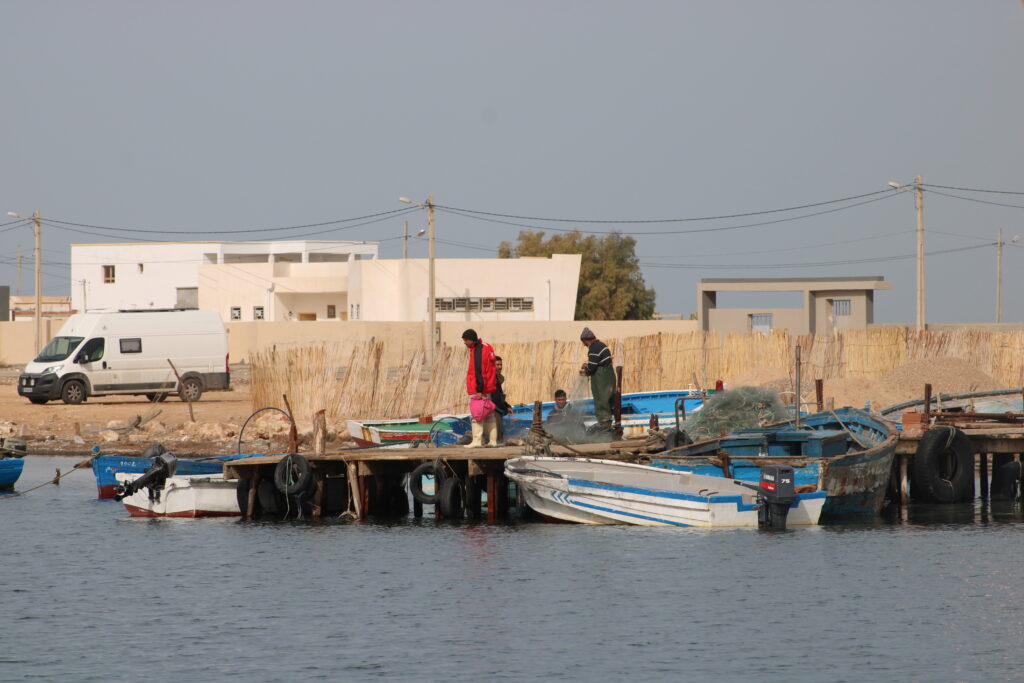
This system was in place for centuries, until, in the 1890s, the community fishing system gave way to an industrial monopoly. The charfias were dismantled in favor of a vast “bordigue” (a bordered space to trap fish) granted to a private operator. Today, El Bibane is still operated under an annual concession system. The operator manages the famous 3.6 km bordigue, unique of its kind as we said, and employs line fishermen. Other fishermen, holding annual licenses, practice net fishing.
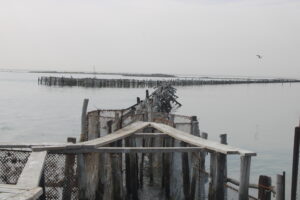
The El Bibane charfia is more than just a vanished technique. It is a symbol of human intelligence in symbiosis with nature, and a vibrant reminder that protecting our wetlands also means preserving the memory of practices that have respected them.
MedPROACT/ INSTM_Hamdi B.Boubaker
 Next Med