In order to identify the most appropriate food industry group for establishing a transnational SmartGreenEcos ecosystem involving 100 SMEs from Greece, Cyprus, Jordan, and Tunisia, the project has followed a robust and methodological process. The underlying assumption is that focusing on a single 3-digit NACE industry group enhances collaboration, analytical clarity, and the replicability of smart-green transition models.
First, the project examined all nine 3-digit NACE food industry groups using comparative data on firm size, dynamism, turnover, exports, supply-chain structure, and the potential for green and digital transitions. Detailed country-level reports provided analysis highlighting sector-specific challenges and opportunities related to energy use, water management, emissions, traceability, automation, and digital maturity.
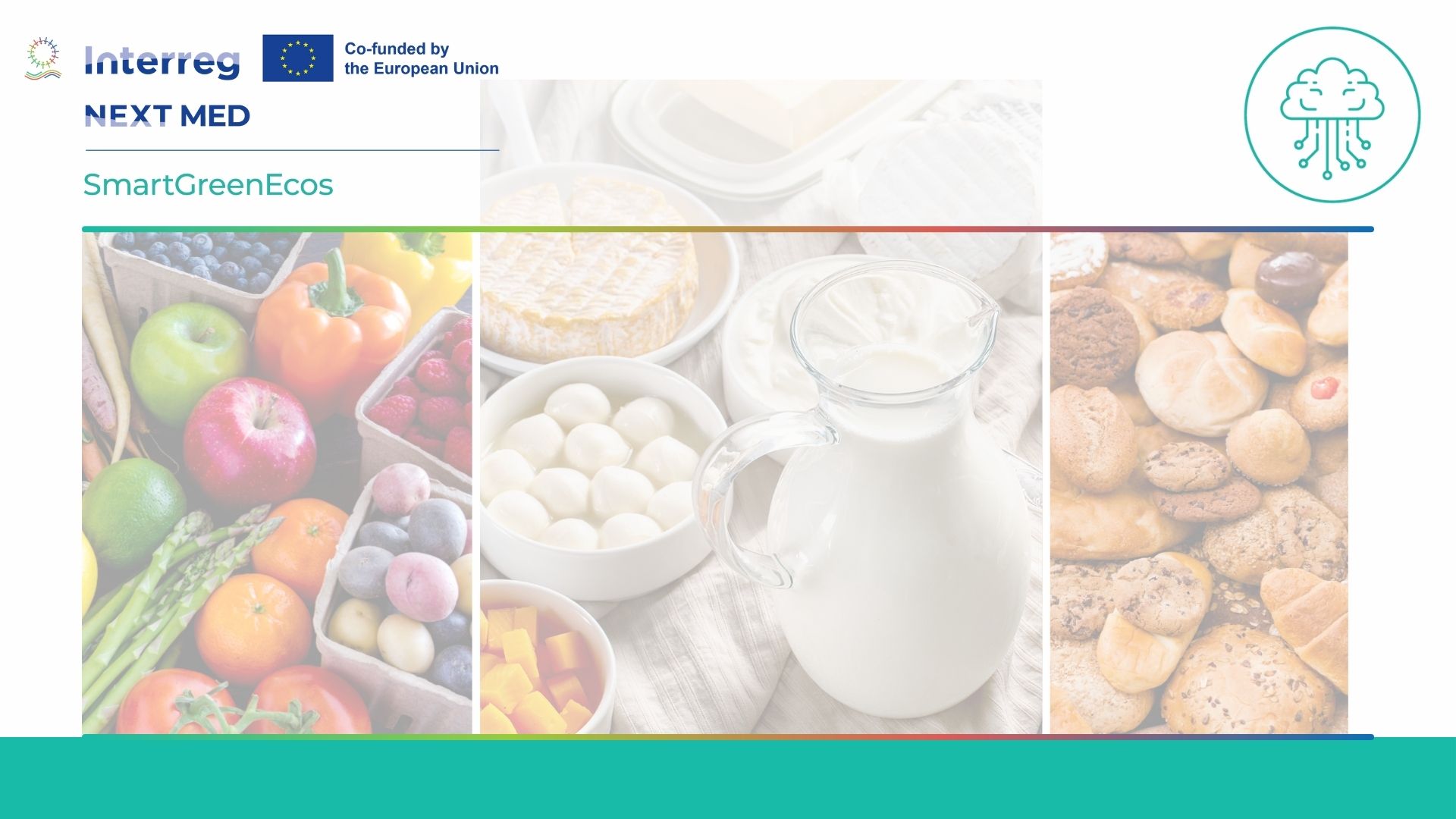
Following an initial screening, the project has excluded industry groups with insufficient numbers of firms or excessive heterogeneity, narrowing the candidates to three groups: fruit and vegetables (NACE 10.3), dairy products (NACE 10.5), and bakery products (NACE 10.7).
According to the detailed country-level assessments, it has been revealed that these sectors face shared yet differentiated challenges across energy intensity, water use, emissions, waste, digitalisation, and traceability. Hence, the project has applied a multi-criteria analysis using eight indicators, normalised across Cyprus, Greece, and Jordan, in order to provide a robust and comparative ranking.
The result clearly identified Manufacture of Dairy Products (NACE 10.5) as the highest-scoring food industry group, reflecting its strong economic weight, export orientation, deep supply chains, and pronounced needs for a green and digital transition. Dairy also demonstrates higher ecosystem maturity, with cooperatives, clusters, and quality-certification systems facilitating cross-border collaboration.
To this end, the project’s partners have decided to focus SmartGreenEcos on the Manufacturing of Dairy Products group, while allowing limited participation of upstream and downstream supply-chain actors, thus offering the strongest basis for testing, validating, and replicating the SmartGreenEcos model of collaborative industry-wide smart-green transition.
The next step of SmartGreenEcos is to prepare a call of participation for SMEs in this industry group.
 Next Med