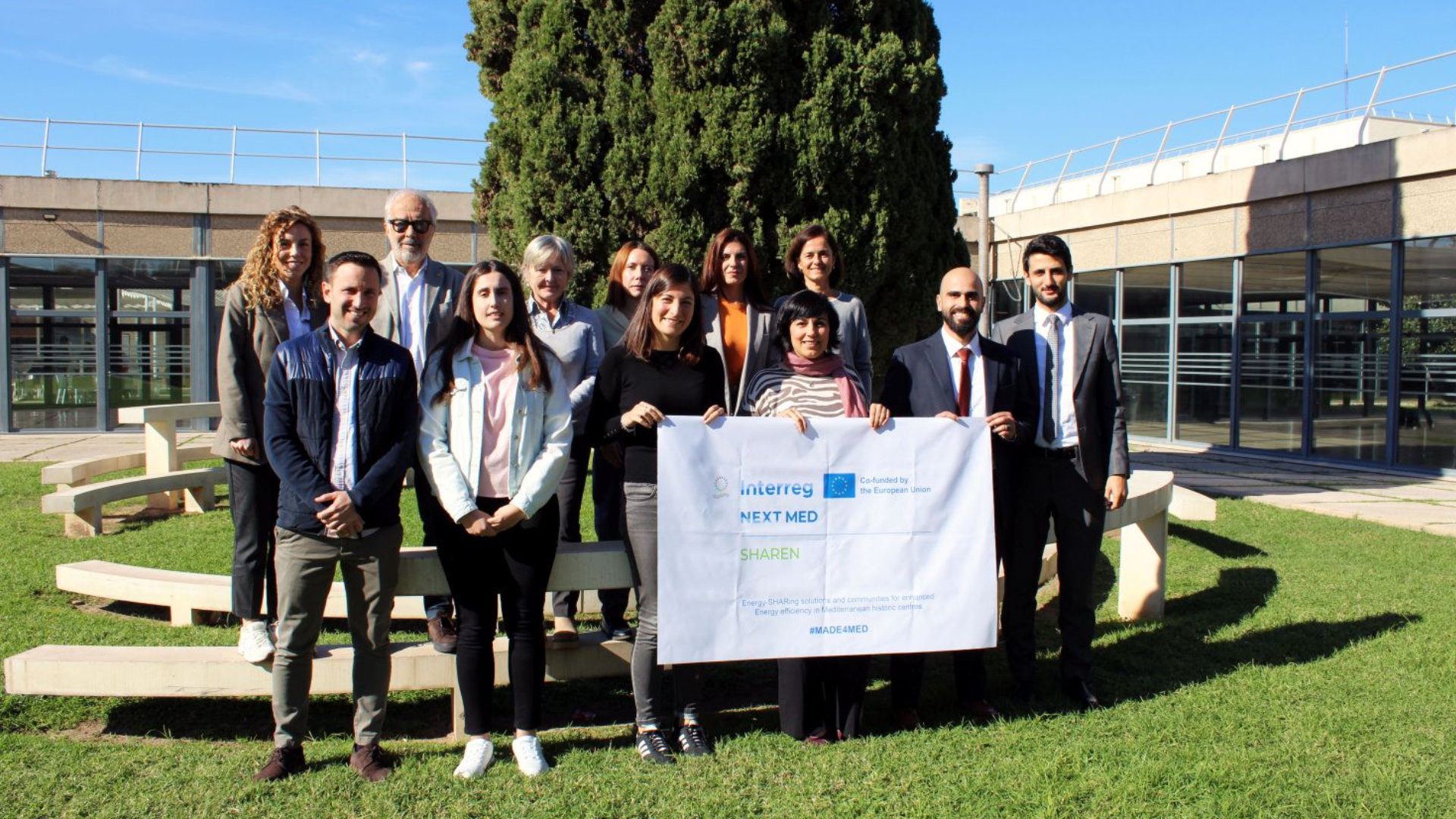
A project addressing a unique Mediterranean challenge
Historic centres across the Mediterranean face the dual challenge of preserving their architectural and cultural heritage while responding to the need for cleaner, more efficient energy systems. Although the region benefits from excellent conditions for renewable energy, the integration of solar technologies often encounters limitations due to heritage protection requirements.
SHAREN seeks to bridge this gap by promoting Energy Sharing Solutions (ESS), including Renewable Energy Communities (REC). These models bring together municipalities, local businesses and residents to jointly generate, share and consume clean energy. This approach enables heritage buildings to benefit from nearby renewable energy production without altering their visual identity, while also improving energy efficiency, strengthening supply security, empowering citizens and reducing energy poverty.
A strong partnership for Mediterranean cooperation
The project is led by the Valencia Institute of Building (IVE), Spain and brings together key institutions from six Mediterranean countries:
- Lebanese Center for Energy Conservation (LCEC) – Lebanon
- Ministry of Environment, Urbanization and Climate Change – Türkiye
- Enercoop Group – Spain
- National Research Council (ISPC-CNR) – Italy
- Royal Scientific Society (RSS–NERC) – Jordan
SHAREN is co-funded by the European Union through the Interreg NEXT MED Programme, with an 89% contribution and a total budget of €2.5 million.
SHAREN Project Pilots
The project will develop four main pilots in Spain (Banyeres de Mariola), Lebanon (Byblos and Anjar) and Jordan (Madaba), aimed at assessing energy-sharing solutions in heritage contexts with specific urban and climatic characteristics. In addition, two complementary pilots will be launched in Türkiye (Usak) and Italy (Monterotondo), intended to deepen the regulatory, social and technological aspects that will enable the model to be replicated and scaled up in other historic centres across the Mediterranean.
Each pilot will work on:
- The activation and support of local energy communities.
- The integration of renewable energy solutions compatible with heritage conservation.
- The improvement of energy efficiency in buildings and urban spaces.
- Citizen engagement and social inclusion in the energy transition.
Two days of intense collaboration in Valencia
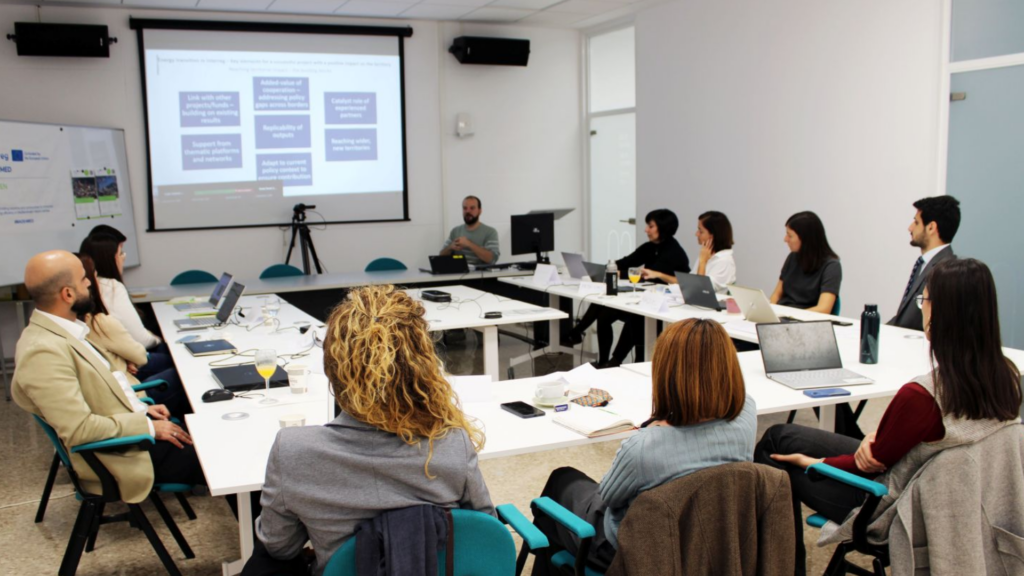
The Kick-off meeting, hosted at the IVE offices, opened with an online intervention from the Joint Secretariat of Interreg NEXT MED, including Charaf M’Rabet and Merve Neslihan Demirok, who introduced the programme framework and provided guidance on financial rules and project recommendations.
A key highlight of the event was the dedicated session by INTERACT, during which Nicolas Garnier delivered an insightful presentation on European cooperation dynamics, emerging synergies among energy community projects, and opportunities for collaboration, replication and cross-fertilisation across Europe—underlining SHAREN’s potential to play a central role within this broader ecosystem of initiatives.
The agenda also included the presentation of the SHAREN pilots in Spain, Lebanon, Jordan, Italy and Türkiye, with updates on local engagement and next implementation steps, as well as the launch of the project’s communication and dissemination strategy and its first visibility materials.
Official reception at the Branch Office for the Western Mediterranean
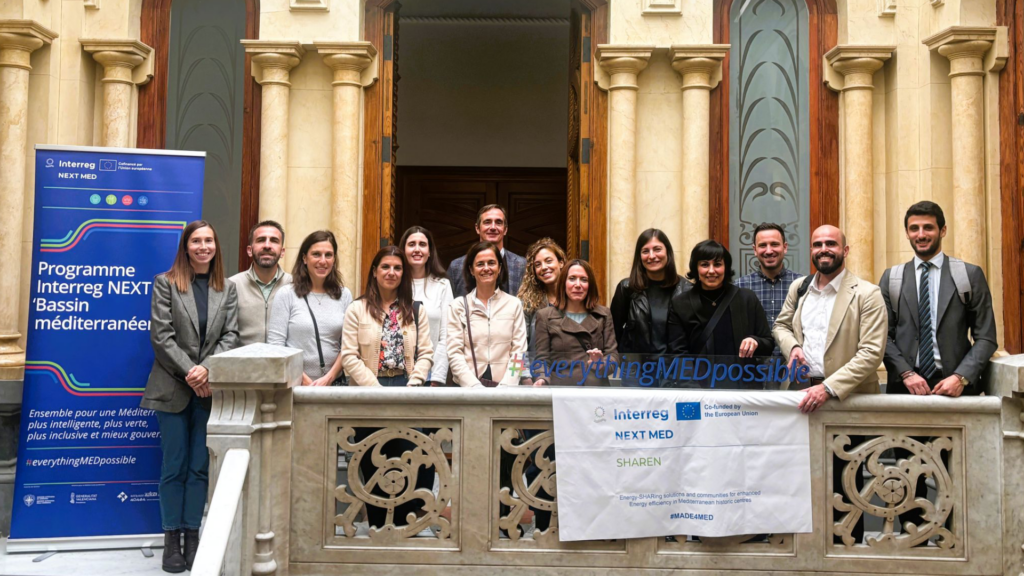
One of the most notable moments of the Kick-off meeting was the official reception at the Branch Office for the Western Mediterranean, located in Valencia’s historic centre. The Branch Office, which provides proximity services, training and communication support to beneficiaries of the Interreg NEXT MED Programme, warmly welcomed the SHAREN consortium and underlined the project’s strategic relevance for the region.
Next steps
In the coming weeks, partners will focus on the characterisation of the Mediterranean historic centres, carrying out a multi-level legal analysis and benchmarking existing energy solutions; they will also advance the mobilisation of territorial stakeholders and the co-creation of Local Action Plans tailored to the economic, technical, social and legal context of each pilot municipality.
 Next Med